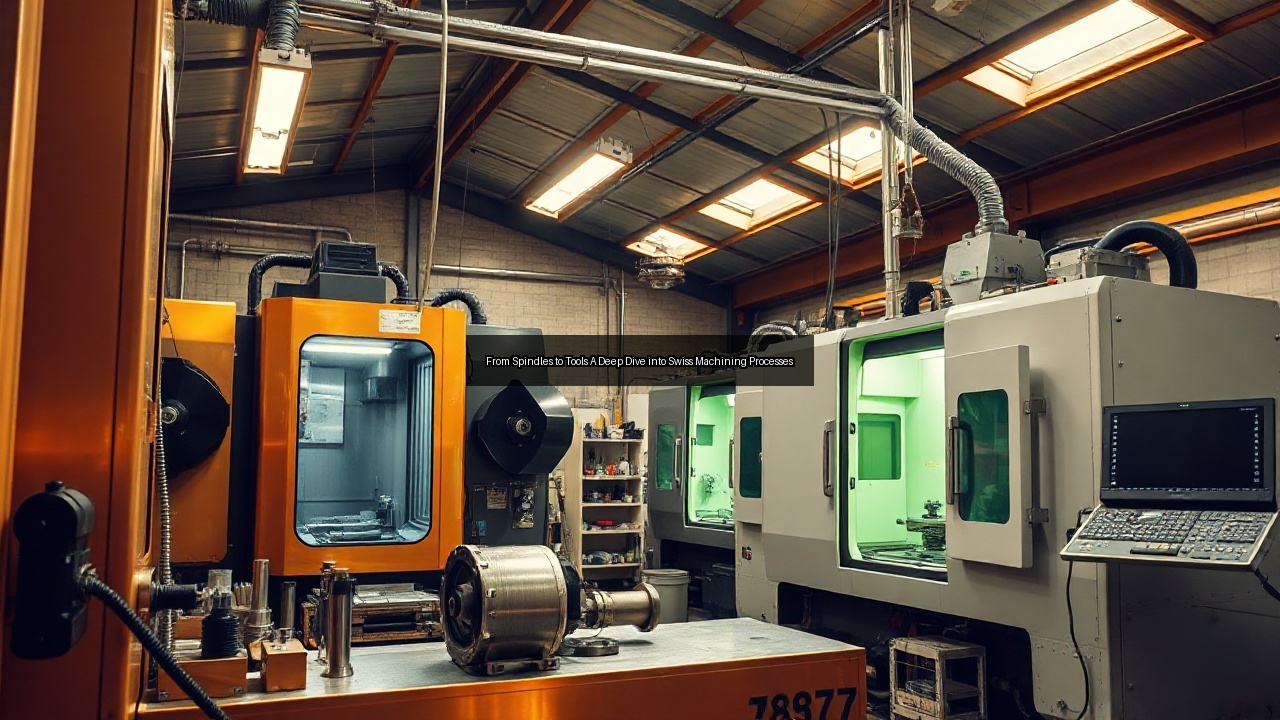
From Spindles to Tools A Deep Dive into Swiss Machining Processes
The Evolution of Swiss Machining
Historical Overview of Swiss Machining
Swiss machining, known for its precision and efficiency, traces its roots back to the late 19th century in Switzerland. Initially, craftsmen used simple lathes and spindles to create intricate parts for watches and small mechanical devices. The craftsmanship involved manual controls and a keen eye for detail, allowing artisans to produce high-quality components. Over the decades, advancements in technology transformed the landscape of Swiss manufacturing. Innovations in machine tools led to the development of dedicated screw machines capable of mass-producing complex components with remarkable accuracy. This evolution laid the groundwork for modern Swiss machining services, allowing for the production of precision parts that meet the stringent demands of various industries.
Key Innovations: From Spindles to CNC
The transition from traditional spindles to Computer Numerical Control (CNC) machines marked a pivotal moment in Swiss machining history. CNC technology introduced automation into the production process, significantly enhancing speed and efficiency. These machines can execute intricate designs with minimal human intervention, ensuring consistent quality across large production runs. Additionally, the introduction of multi-axis CNC machines expanded the capabilities of Swiss machining, enabling manufacturers to produce complex geometries that were previously unattainable. The integration of CAD/CAM software streamlined design and fabrication processes, allowing for rapid prototyping and adjustments. This technological leap has positioned Swiss machining as a leader in precision engineering, catering to industries that demand tight tolerances and high reliability, such as aerospace and medical sectors.
The Role of Teflon and Other Materials in Swiss Machining
Material choice plays a crucial role in the effectiveness of Swiss machining processes. Teflon (PTFE) has gained prominence in recent years due to its excellent chemical resistance and low friction properties. Swiss machining services often incorporate Teflon in applications requiring non-stick surfaces or where chemical exposure is a concern. Beyond Teflon, other materials like stainless steel, copper, nylon, and acetal are frequently machined. Each material presents unique challenges and benefits, influencing factors like tool wear, machining speed, and overall efficiency. For instance, stainless steel offers durability and corrosion resistance, making it ideal for medical implants, while copper excels in electrical conductivity. Understanding material properties allows Swiss machining providers to tailor their approaches, ensuring optimal outcomes for various applications.
Understanding Swiss Machining Processes
Overview of CNC Machining Techniques
CNC machining encompasses several techniques crucial for modern manufacturing. Swiss screw machining, a standout method, excels in producing long, slender parts with high precision. It uses a rotating spindle and a series of cutting tools to create complex geometries while maintaining tight tolerances. CNC turning, another popular technique, involves rotating the workpiece against a stationary cutting tool, allowing for the creation of cylindrical shapes. CNC milling, on the other hand, employs rotating cutting tools to remove material from a stationary workpiece, enabling the fabrication of flat or contoured surfaces. Together, these techniques form a comprehensive toolkit for Swiss machining, ensuring versatility and adaptability in production. Each method contributes to improved throughput and efficiency, making them indispensable in high-demand environments.
The Importance of Precision: Tolerances and Accuracy
Precision remains the cornerstone of Swiss machining processes. Achieving tight tolerances—sometimes as low as ±0.001 mm—ensures that machined parts fit together seamlessly in their intended applications. This level of accuracy is critical in industries like aerospace and medical equipment, where even the slightest deviation can lead to significant failures. Swiss machining services leverage advanced CNC technology to maintain these high standards throughout the production process. Rigorous quality control measures, including the use of precision measuring tools and adherence to ISO 9001 certification, further reinforce the commitment to accuracy. By prioritizing precision, manufacturers enhance reliability, reduce waste, and ultimately deliver superior products to their clients.
An Insight into Screw Machining and Threading
Screw machining and threading represent specialized areas within Swiss machining, focusing on the production of threaded components. Screw machines produce parts by feeding bar stock into a rotating spindle, where cutting tools shape the material into the desired form. This process is particularly effective for high-volume production runs, as it maximizes efficiency and minimizes waste. cnc machining service Threading, whether external or internal, requires precise adjustments to achieve the necessary fit and function. The ability to create various thread types—such as metric, UNF, or ACME—enables Swiss machining services to cater to diverse client needs. Innovations in tooling and programming allow for rapid changes in production, accommodating different thread specifications without compromising quality or speed.
Applications and Industries Utilizing Swiss Machining
Aerospace and Medical: High-Precision Needs
The aerospace and medical industries demand the highest levels of precision and reliability, making Swiss machining indispensable. In aerospace, components must withstand extreme conditions, requiring robust materials and precise engineering. Machined parts, such as turbine blades and structural components, often undergo rigorous testing to ensure they meet stringent safety standards. Similarly, the medical field relies on Swiss machining for manufacturing surgical instruments, implants, and devices where precision is critical for successful outcomes. The integration of advanced materials and cutting-edge technologies allows Swiss machining services to address the unique challenges of these industries, ensuring that every part produced meets the required specifications.
Volume Production: JIT and Logistics Management
Just-in-Time (JIT) production models have transformed how industries manage inventory and production schedules. Swiss machining services excel in high-volume production, offering efficiency and flexibility that align with JIT principles. By minimizing excess inventory and reducing lead times, manufacturers can respond quickly to changing market demands. Efficient logistics management plays a crucial role in this process, ensuring timely delivery of machined parts while maintaining quality standards. The ability to rapidly scale production up or down without sacrificing accuracy or efficiency is a significant advantage of Swiss machining. This adaptability allows companies to maintain competitiveness in fast-paced markets where responsiveness is crucial.
Material Varieties: From Copper to Nylon and PTFE
Swiss machining services utilize a diverse range of materials, allowing for flexibility in applications. Copper, known for its excellent conductivity, is commonly used in electrical components. Stainless steel offers strength and corrosion resistance, ideal for medical and aerospace applications. Nylon and acetal provide lightweight, durable alternatives for non-critical applications. Teflon (PTFE), with its unique properties, is used when chemical resistance and low friction are essential. Each material presents specific machining challenges, from tool wear to machining speed. Skilled machinists understand these nuances, ensuring that the right tools and techniques are employed for each material type, enhancing both efficiency and product quality.
Choosing a Swiss Machining Service Provider
Evaluating Quality: ISO 9001 Certification
When selecting a Swiss machining service provider, quality assurance is paramount. ISO 9001 certification indicates a commitment to maintaining high standards in quality management. Companies that achieve this certification demonstrate their ability to consistently deliver products that meet customer requirements and regulatory standards. Evaluating a provider’s quality control processes, including their use of precision measuring instruments and adherence to established protocols, helps ensure that the parts produced will meet specific tolerances and performance criteria. Clients should inquire about a provider’s experience in their particular industry, as familiarity with industry-specific standards can further enhance the reliability of the final product.
Factors Affecting Efficiency and Speed
Efficiency and speed are critical in Swiss machining, impacting overall production costs and delivery timelines. Several factors influence these elements, including machine capabilities, tooling, and operator expertise. Advanced CNC machines equipped with multi-axis capabilities can significantly enhance throughput, allowing for the machining of complex parts in a single setup. Additionally, high-quality cutting tools are essential for minimizing downtime due to wear and tear. Skilled operators who understand the intricacies of their machines and materials contribute to maintaining optimal speed and efficiency. By evaluating these factors, businesses can identify service providers that align with their production needs and goals.
The Future of Swiss Machining: Trends and Innovations
Swiss machining is on the verge of exciting advancements, driven by technological innovations and evolving industry demands. The integration of Industry 4.0 concepts, such as IoT and smart manufacturing, promises to revolutionize production processes. These technologies enable real-time monitoring of machining operations, improving efficiency and reducing downtime. Furthermore, advancements in materials science allow for new, high-performance materials that can be machined more effectively. The rise of additive manufacturing also presents opportunities for hybrid processes, combining traditional machining with 3D printing to create complex parts more efficiently. As Swiss machining continues to evolve, service providers must stay ahead of trends to meet the ever-changing needs of their clients.