Choosing Between 304 Stainless Steel and Other Materials for Ribbon Blenders
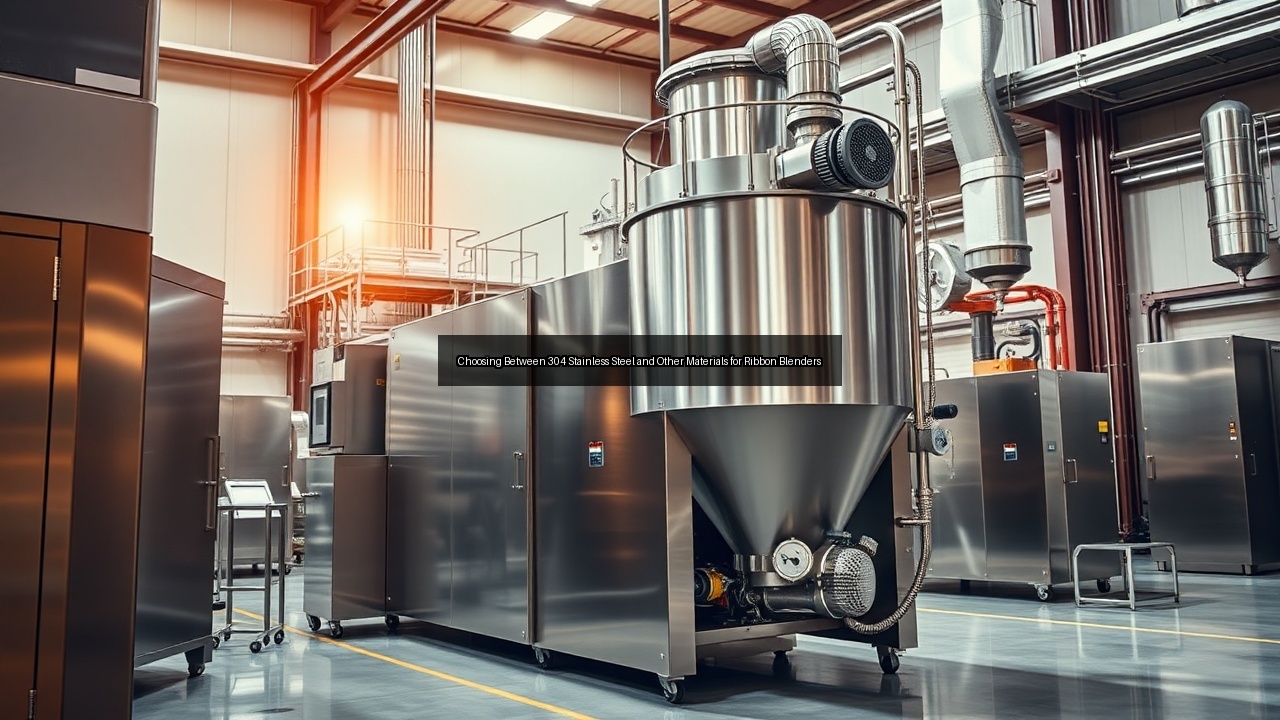
Understanding Ribbon Blenders and Their Applications
What is a Ribbon Blender?
A ribbon screw blender features a horizontal trough fitted with double helical ribbons mounted on a central shaft. These ribbons rotate to create a counter-current flow that lifts material from the bottom and folds it over the top. The design incorporates inner and outer screws that move product in opposite directions for thorough agitation. Manufacturers build these units with a discharge valve at the center or end to release blended batches efficiently. Operators rely on the ribbon screw blender when they need consistent distribution of powders and granules without excessive shear. The troughs hold the product while the rotating elements prevent dead zones. This construction allows quick cycles and easy cleaning between runs. Ribbon screws handle batch sizes from lab scale to several thousand liters in industrial settings.
Common Applications of Ribbon Blenders
Food processors use ribbon blenders to combine dry ingredients like flour, spices, and additives into uniform mixes. Chemical plants rely on them for blending pigments, resins, and fillers before packaging. Pharmaceutical companies choose ribbon screw blenders for preparing excipients and active blends that require precise homogeneity. Agricultural firms mix fertilizers and seeds in these machines to ensure even nutrient distribution. Many facilities pair the blender with a rotary valve for controlled feeding into downstream equipment. Dry blender operations benefit from the gentle action that preserves particle integrity in fragile materials. Ribbon blenders also serve in cosmetics production for talc and pigment combinations. Their versatility makes them a staple across industries that process bulk powders daily.
Key Features of Ribbon Screw Blenders
Ribbon screw blenders stand out for their robust shaft construction that withstands heavy loads during extended runs. The overlapping ribbons create multiple flow patterns that reduce mixing time compared with paddle-style units. Adjustable RPM settings let operators match speed to material characteristics and avoid overworking sensitive powders. Many models include safety covers and interlocks that protect workers during operation. Discharge options range from slide gates to pneumatic valves for seamless integration with conveyors. American manufacturers often equip these blenders with variable frequency drives that fine-tune horsepower delivery. The overall design minimizes residue buildup inside the trough, which simplifies sanitation protocols. These features deliver reliable performance across repeated cycles in demanding production environments.
Material Considerations for Ribbon Blenders
Importance of Material Selection
Material choice directly influences equipment longevity and product purity in any ribbon screw blender. Corrosive or abrasive products accelerate wear on inferior surfaces, leading to contamination and unplanned downtime. Facilities processing food or pharmaceuticals demand surfaces that resist bacterial adhesion and withstand aggressive cleaning agents. Proper selection also affects heat transfer during mixing and the machine’s ability to maintain structural integrity under torque. Engineers evaluate chemical compatibility, mechanical strength, and regulatory standards before finalizing construction. Incorrect material decisions raise maintenance costs and shorten service life. Thoughtful upfront analysis ensures the blender meets both operational demands and hygiene requirements without compromise.
Overview of Common Materials Used in Blenders
Carbon steel offers high strength at lower cost and suits non-corrosive dry blending tasks. Aluminum provides lightweight construction for portable units but lacks durability in abrasive applications. Mild steel with coatings serves short-term needs yet requires frequent reapplication. Stainless steel grades dominate when hygiene or corrosion resistance matters most. Operators select 304 stainless steel for its balance of workability and performance in most industrial mixer environments. Nickel alloys handle extreme conditions but increase project budgets substantially. Each option carries distinct fabrication and maintenance profiles that affect long-term ownership expenses.
Pros and Cons of Using Stainless Steel in Mixers
Stainless steel resists rust and chemical attack, preserving product quality across many batches in a ribbon blender. Its smooth finish reduces adhesion of powders and simplifies wash-down procedures. Fabricators weld and polish it easily to create crevice-free interiors that meet sanitary standards. On the downside, stainless commands higher initial pricing than carbon steel and requires specialized tooling during build. Heavier sections increase shipping weight and foundation requirements. Yet the extended service interval and reduced contamination risk often offset these factors for facilities that prioritize uptime. Stainless steel mixers maintain appearance and function longer under continuous industrial use.
304 Stainless Steel vs. Other Materials
Properties of 304 Stainless Steel
304 stainless steel contains chromium and nickel that form a passive oxide layer, protecting the surface from oxidation in moist or mildly acidic conditions. It exhibits excellent formability, allowing tight bends and seamless welds in trough and ribbon construction. The alloy withstands temperatures up to 800 degrees Celsius without losing strength, suiting heated mixing processes. Yield strength around 30 ksi provides adequate resistance to deformation under mixing loads. Fabricators appreciate its machinability when creating precise ribbon screw profiles and shaft keyways. These attributes make 304 stainless steel the default choice for ribbon blenders handling food, chemical, and pharmaceutical powders.
Comparative Analysis: 304 Stainless Steel vs. Carbon Steel
Carbon steel delivers greater hardness and lower cost, yet it rusts quickly when exposed to humidity or cleaning solutions. A ribbon screw blender built from carbon steel needs protective coatings that wear away over time. In contrast, 304 stainless steel maintains its surface without additional treatment, eliminating coating maintenance cycles. Carbon steel also transfers heat differently, which can affect temperature-sensitive blends. Stainless models resist pitting from salts and acids common in many powder formulations. While carbon steel suits basic dry blending of inert materials, 304 stainless steel extends equipment life when operators demand consistent hygiene and corrosion protection.
Cost Considerations for Different Materials
Initial quotes for a 304 stainless steel ribbon blender typically run 30 to 50 percent higher than equivalent carbon steel units. However, lifecycle costs drop because stainless eliminates repainting and reduces corrosion-related repairs. Facilities avoid product recalls tied to metal contamination when they invest in stainless construction. Carbon steel may appear economical for short production runs, yet frequent replacements erode savings. American suppliers often stock standard 304 stainless components, shortening lead times compared with exotic alloys. Buyers calculate payback periods by factoring reduced downtime and lower sanitation labor against the higher purchase price. Most operations processing valuable or regulated powders find stainless delivers superior return on investment.
Performance Factors in Ribbon Blenders
Impact of Material on Mixing Efficiency
Material surface finish influences how powders flow across the ribbons and screws inside the trough. Smooth 304 stainless steel reduces friction, allowing faster circulation and shorter blend times. Rougher carbon steel surfaces can trap fines and create uneven distribution that requires extended mixing cycles. The alloy also affects heat generation from friction; stainless dissipates energy more evenly. Operators notice consistent batch uniformity when they select stainless for the ribbon screw blender. This efficiency gain compounds across high-volume production schedules.
How Construction Affects Performance
Weld quality and ribbon alignment determine whether a blender achieves its rated mixing performance. Precision-formed 304 stainless steel ribbons maintain consistent clearance with the trough walls throughout the service life. Misaligned screws in lower-grade materials cause vibration that accelerates bearing wear and raises energy consumption. Reinforced shafts in stainless models handle higher torque without deflection, preserving mixing action at full loads. Proper construction also minimizes leakage around seals and discharge points. These details directly translate into reliable output and predictable cycle times for industrial mixing operations.
Understanding Horsepower and RPM in Mixers
Horsepower ratings dictate the motor size needed to drive the ribbon screw at target speeds. Higher horsepower allows faster RPM without stalling under dense powder loads. Operators adjust RPM to balance mixing speed against shear sensitivity; delicate materials require lower settings to avoid degradation. Modern drives let users ramp speed gradually, reducing startup stress on the shaft and ribbons. Matching horsepower to batch size and material density prevents overload while optimizing energy use. Ribbon blenders equipped with variable controls deliver flexibility across multiple product lines without mechanical changes.
Choosing the Right Blender for Your Needs
Deciding Between 304 Stainless Steel and Other Options
Evaluate product chemistry first. If the powders contain salts, acids, or moisture, 304 stainless steel prevents corrosion that would otherwise compromise batches. For inert dry materials processed in short campaigns, carbon steel may suffice if contamination risk stays low. Consider future product expansions; stainless construction accommodates a wider range of formulations without equipment swaps. Review sanitation protocols and regulatory audits to confirm which material meets documentation requirements. Facilities that document every contact surface often standardize on 304 stainless steel to simplify compliance records.
Evaluating Your Material Needs Based on Application
Map the full process flow, including upstream feeding and downstream packaging. A ribbon screw blender feeding a rotary valve or pneumatic line benefits from stainless surfaces that resist wear at transition points. Calculate expected batch frequency and cleaning intervals to project total ownership cost. Test small samples in both carbon and stainless units when product characteristics fall near decision boundaries. Document particle size, bulk density, and flow behavior to predict how each material will perform under actual operating conditions. This data-driven approach removes guesswork from the final selection.
Conclusion: Making an Informed Choice
Selecting the correct ribbon screw blender requires balancing upfront cost, material compatibility, and long-term performance goals. 304 stainless steel consistently provides corrosion resistance, cleanability, and durability that support high-quality production across diverse powder applications. Facilities that analyze their specific powders, sanitation needs, and throughput demands arrive at equipment choices that minimize downtime and protect product integrity. Thoughtful evaluation of horsepower, RPM, trough design, and ribbon configuration further refines the decision. The result is reliable industrial mixing equipment that meets both immediate production targets and future operational flexibility.